















The Ultimate Guide to Online Payment Integration
Integrating a payment gateway is essential for secure online transactions and protecting PCI scope. 3 protocols. A clean integration supports multiple payment methods while ensuring a smooth checkout experience.
Merchant accounts, acquiring routes, and chargeback controls, matched to your risk profile.

Integrating a payment gateway is important for any business wishing to conduct online transactions securely and efficiently.
Whether you’re operating an eCommerce store or providing other online services, a payment gateway integration means you can streamline payment processing, reduce transaction fees, and offer multiple payment methods, beyond just credit or debit cards, ensuring that your customers enjoy a smooth and secure transaction experience.
This comprehensive guide will walk you through what a payment gateway is and how to integrate a payment gateway into your website. It will also look at selecting the optimal payment gateway provider to execute a seamless implementation - ensuring you can process payments online with confidence.
How a payment gateway processes transactions
A payment gateway is a service that authorises credit card or direct payments for online businesses. It acts as a bridge between your online store and the payment processor, ensuring that transactions are secure, efficient, and compliant with industry standards.
Operational Mechanics and Costs
Technically, when a customer submits card details, the gateway encrypts the sensitive data using TLS 1.3 protocols before routing it to the acquiring bank. The acquirer passes the transaction through card networks (such as Visa or Mastercard) to the issuing bank to perform Strong Customer Authentication (SCA) under UK regulations and verify fund availability.
Key operational parameters include:
- Authorisation speed: The real-time approval process takes between 1 and 3 seconds.
- Settlement timelines: Cleared funds are typically remitted to your merchant account on a T+2 or T+3 rolling business day schedule.
- Cost components: Gateways usually charge a fixed fee (around 10p to 20p per transaction) on top of standard interchange and card scheme percentage charges.
How to Integrate a Payment Gateway into Your Website
The first step in the integration process is selecting the right payment gateway provider, and part of this includes what is the best payment gateway for you!
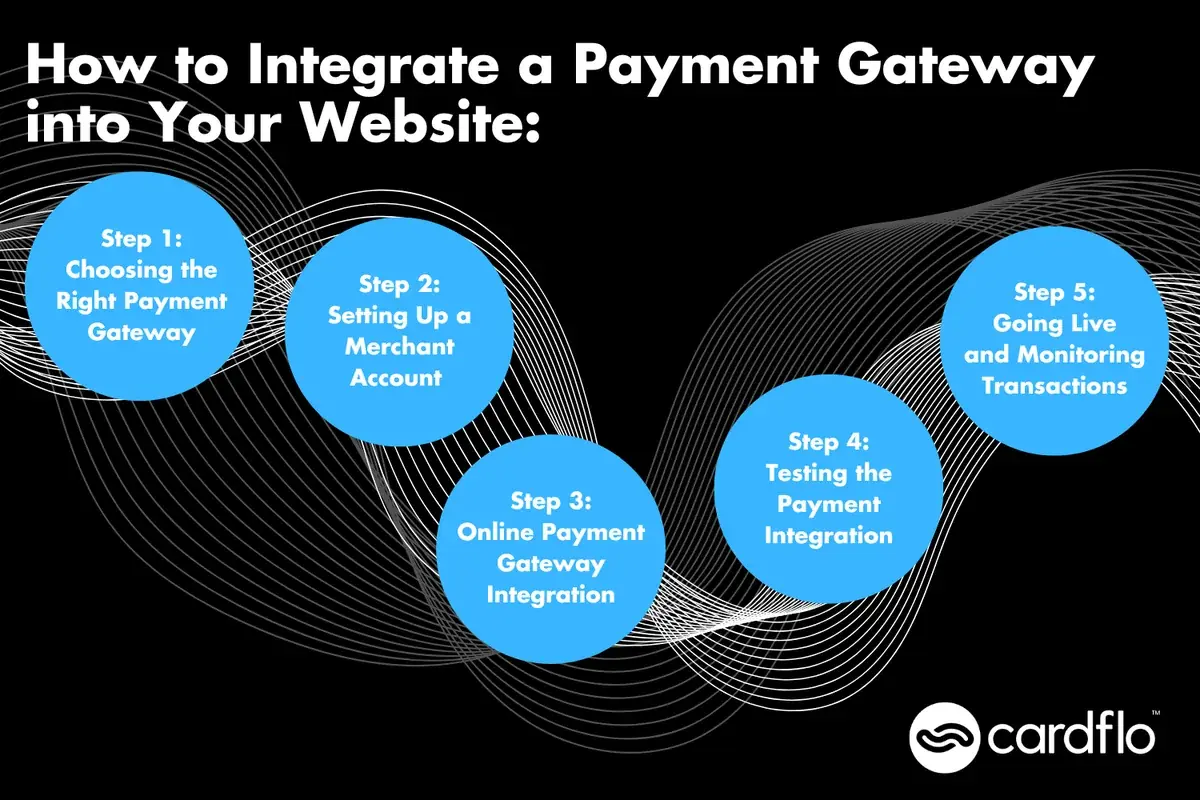
Step 1: Choosing the Right Payment Gateway
With a multitude of options available, it can feel overwhelming to determine which solution best fits your business model. Look for a payment gateway that aligns with your operational needs and offers a diverse range of payment options, including credit and debit cards, PayPal payments, mobile payments, and bank transfers.
Evaluate key factors such as transaction fees, processing costs, and access to advanced fraud prevention tools.
The ideal payment gateway is one that not only meets your current requirements but one that can scale with your business growth, enabling you to accept international payments and manage recurring payments effortlessly.
Step 2: Setting Up a Merchant Account
Most payment gateway services will guide you through the onboarding process, ensuring you achieve PCI compliance and are fully prepared to start accepting payments.
Be vigilant about any monthly fees or hidden costs that may arise, as these can impact your overall payment processing expenses.
Step 3: Online Payment Gateway Integration
Many payment gateway providers offer user-friendly plugins for popular platforms like WordPress, Shopify, and Magento. This means you can integrate a payment gateway without needing extensive technical knowledge of integration methods.
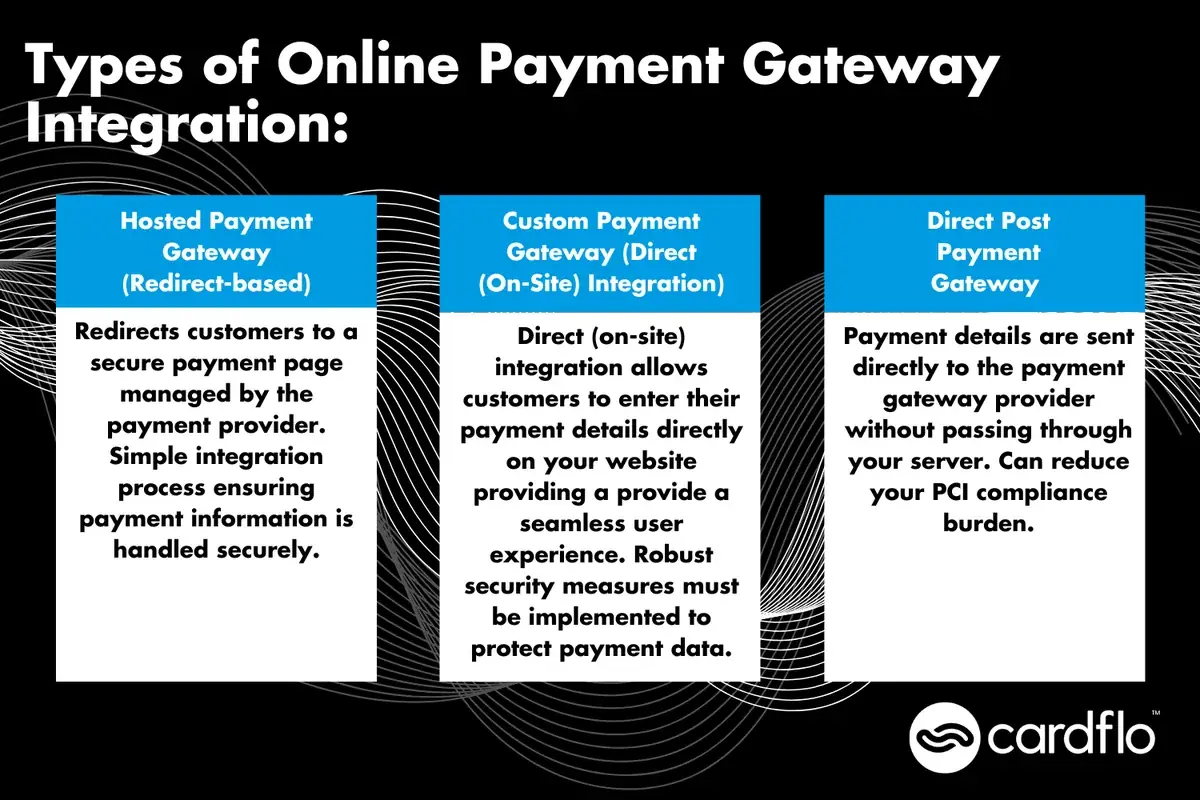
Hosted Payment Gateway (Redirect-based)
A widely adopted option is the hosted payment gateway, which redirects customers, once they have made a payment request, to a secure payment page managed by the payment provider. This method simplifies the integration process and ensures that sensitive payment information is handled securely.
By directing customers to a secure environment to complete their transactions, you can enhance trust and reduce the risk of data breaches, allowing you to focus on scaling your online store.
Custom Payment Gateway (Direct (On-Site) Integration)
For businesses seeking to provide a seamless user experience, direct (on-site) integration allows customers to enter their payment details directly on your website.
While this method enhances the customer journey, it also necessitates the implementation of robust security measures to protect sensitive payment data. Think of it as hosting a high-profile event - you want to ensure that your guests feel safe and secure while enjoying the experience.
Direct Post Payment Gateway
Another viable option is the direct post method, where payment details are sent directly to the payment gateway provider without passing through your server. This approach can help reduce your PCI compliance burden, making it a popular choice for many businesses.
It’s akin to having a dedicated security team that ensures only the right transactions are processed, maintaining the integrity of your payment processing system.
Step 4: Testing the Payment Integration
Before launching your payment gateway, thorough testing is essential. Conduct test transactions to ensure that the integration functions smoothly and that customers can complete their purchases without any issues.
Verify that transaction approvals are functioning correctly and that payment links are operational. This step is crucial to avoid any disruptions once your online store goes live.
Step 5: Going Live and Monitoring Transactions
Once you’ve completed testing and are confident in your payment gateway integration, it’s time to go live! However, the work doesn’t stop there.
Continuous monitoring of transactions is essential to identify and address any potential issues promptly. This is particularly important if you’re accepting international payments, as different regions may have varying transaction fees and processing times.
Regularly reviewing your payment data will help ensure that your payment processing remains efficient and secure.
Online Payments
With the rise of global eCommerce sales, businesses must adopt effective online payment integration strategies to cater to their customers' preferences.
By incorporating a smart payment button, you can streamline the checkout process and support the most popular payment methods, such as PayPal balance, ensuring that your customers have a variety of options at their fingertips.
Additionally, implementing recurring billing features can help businesses manage subscriptions effortlessly. However, a must is to prioritise security measures to protect sensitive customer information during actual processing.
By focusing on these elements, you can create a robust online payment system that not only meets customer expectations but drives sales and fosters trust in your brand.
When deploying online payment infrastructure, merchants must carefully evaluate fee structures and clearance windows to protect cash flow and margin efficiency:
- Interchange Plus Pricing: This model explicitly unbundles scheme fees (capped at 0.2% for UK consumer debit and 0.3% for consumer credit under interchange rules) from the acquirer’s margin. This is generally more cost-effective for growing merchants than standard flat-rate pricing (typically 1.4% + 20p).
- Settlement Timings: Standard processing funds clear on a rolling T+2 to T+5 schedule (where T represents the transaction day). High-risk business models may incur a 5% to 10% rolling reserve held for up to 90 days.
- SCA and 3DS2 Compliance: Deploying 3D Secure 2.0 authenticates cardholders seamlessly, meeting UK Strong Customer Authentication rules while shifting chargeback liability for fraudulent transactions to the issuing bank.
Frequently asked questions
There are some frequently asked questions users looking at a payment gateway integration ask.
Do I Need a Merchant Account to Use a Payment Gateway?
Yes, most payment gateways require you to have a merchant account. This bank account allows you to accept payments and manage your funds. Some payment gateway providers offer merchant accounts as part of their services, simplifying the process for you.
How Can I Ensure Secure Transactions?
To ensure secure transactions, choose a payment gateway that offers robust security measures, such as encryption, tokenisation, and advanced fraud protection. Additionally, ensure that your website is PCI compliant and regularly update your security protocols to safeguard sensitive payment data.
Can I Accept International Payments?
Absolutely! Many payment gateways support international transactions, allowing you to accept payments from customers around the globe. Just be mindful of any additional transaction fees that may apply, as these can vary by region.
How long does integration take and what are the payout timings?
Plugin-based integrations on platforms such as WooCommerce or Shopify usually take under two hours using your live API keys. In contrast, custom REST API builds require five to ten working days for developer configuration, sandbox testing, and 3D Secure (3DS2) authentication verification.
After going live, fund settlement timing depends on your acquiring agreement:
- Standard settlement: Funds are paid out on a rolling T+2 or T+3 basis (two to three business days post-transaction).
- Rolling reserves: Higher-risk sectors may face a 5% to 10% reserve held for 90 days to cover potential chargebacks.
Processing costs in the UK typically reflect interchange caps: domestic consumer debit card fees are capped at 0.2%, and consumer credit cards at 0.3%, plus your gateway provider's fixed pence margin per transaction.
Cardflo's integrated payment gateway solutions
Cardflo understands that accepting payments should be straightforward and efficient. Our integrated payment gateway solutions are designed to meet your business needs, whether you’re offering credit card payments, bank transfers, or recurring billing.
With our user-friendly interface and robust security measures, you can start accepting payments online with ease. Let us help you streamline your payment processing and enhance your customer experience today!
Technical Implementation and Settlement Mechanics
To deploy the gateway via direct API integration, developers utilise RESTful endpoints with Webhooks to receive real-time transaction status updates. Settlement typically operates on a rolling T+2 business day schedule, moving cleared funds directly into your designated UK business bank account.
Pricing structures usually follow an Interchange Plus Plus (IC++) model to ensure fee transparency:
- Standard UK/EEA Consumer Cards: Approximately 1.4% plus a 20p fixed fee per transaction.
- International and Commercial Cards: Typically 2.9% plus a 20p fixed fee, subject to cross-border processing rates.
To minimise chargeback risks and comply with UK regulation, the system automatically routes eligible transactions through 3D Secure 2.2 for Strong Customer Authentication (SCA), shifting fraud liability to the card issuer.
Related reading
Building a custom payment gateway involves developing technology to encrypt and route transactions between checkouts and card networks. This process requires strict adherence to regulatory requirements to protect sensitive data. Merchants must obtain necessary certificates and perform regular audits to maintain compliance. Failure to adhere to these rules can result in fines and the inability to process.
Opening a merchant account is essential for any eCommerce or retail business wanting to accept electronic payments. This guide explains how acquiring banks and providers process transactions from Visa and Mastercard. It details the necessary documentation and steps required to receive funds from customer card payments. Merchants must select the specific networks they wish to accept before applying.
Modern businesses must offer diverse payment options including credit cards, Apple Pay, and Google Pay. Merchants should evaluate settlement timelines and processing fees when selecting methods for eCommerce. Open Banking and alternative payment methods provide additional ways to enhance the customer experience. UK consumer debit cards incur interchange fees capped at 0.2% and typically settle in T+2 days.